
Roof Inspection Guide for Property Owners in 2026
Ensure your property's safety with our 2026 roof inspection guide. Learn how timely inspections save money and prevent costly repairs.

A roof inspection is a systematic evaluation of your roofing system’s materials, structure, drainage, ventilation, and attic interior to detect damage and support maintenance planning. Most property owners treat their roof as an afterthought until water appears on the ceiling. By then, a $300 inspection has turned into a $15,000 repair. A professional roof evaluation catches problems at the source, before they compound into structural failures, insurance disputes, or compliance violations. Certified inspections cover six distinct roofing zones and typically run 45–90 minutes depending on roof size and complexity.
What Does A Roof Inspection Include?
A thorough roof inspection evaluates six critical zones: roof materials, flashing, drainage systems, ventilation, structural elements, and the attic interior. Each zone tells a different part of the story. Cracked shingles point to age and UV exposure. Failed flashing points to water intrusion risk. Blocked drains point to ponding and membrane stress on flat commercial roofs.
Certified inspectors use three core techniques during an evaluation:
- Visual check from ground level and on-roof: Binoculars catch most surface defects. About 85% of roof problems are visible from the ground, but a walk-through adds precision on slope, seam integrity, and fastener condition.
- Attic access and interior assessment: The attic reveals what the exterior hides. Moisture staining, daylight penetration, and insulation compression all signal active leaks that surface-level checks miss entirely.
- Moisture and ventilation assessment: Inspectors measure humidity levels and check soffit and ridge vents for blockages. Poor ventilation accelerates shingle deterioration and drives up energy costs.
Pro Tip: Never skip the attic during a professional evaluation. A complete roof inspection requires both exterior and interior assessment because leaks frequently travel along hidden pathways before appearing as visible damage.
Findings are documented with photos, location notes, and severity ratings. A well-structured report assigns each finding one of three urgency levels: urgent, routine, or monitor. Urgent items require repair within 30 days. Routine items get addressed within 90 days. Monitor items are re-evaluated at the next scheduled inspection. This framework prevents the common trap of treating every finding as a crisis, which paralyzes maintenance budgets and delays real repairs.
The report also includes a remaining lifespan estimate for the roof system. That single data point is worth the cost of the inspection on its own. It tells you whether you are managing a roof with five years left or fifteen, which changes every capital planning decision you make.
How Often Should You Schedule Roof Inspections?
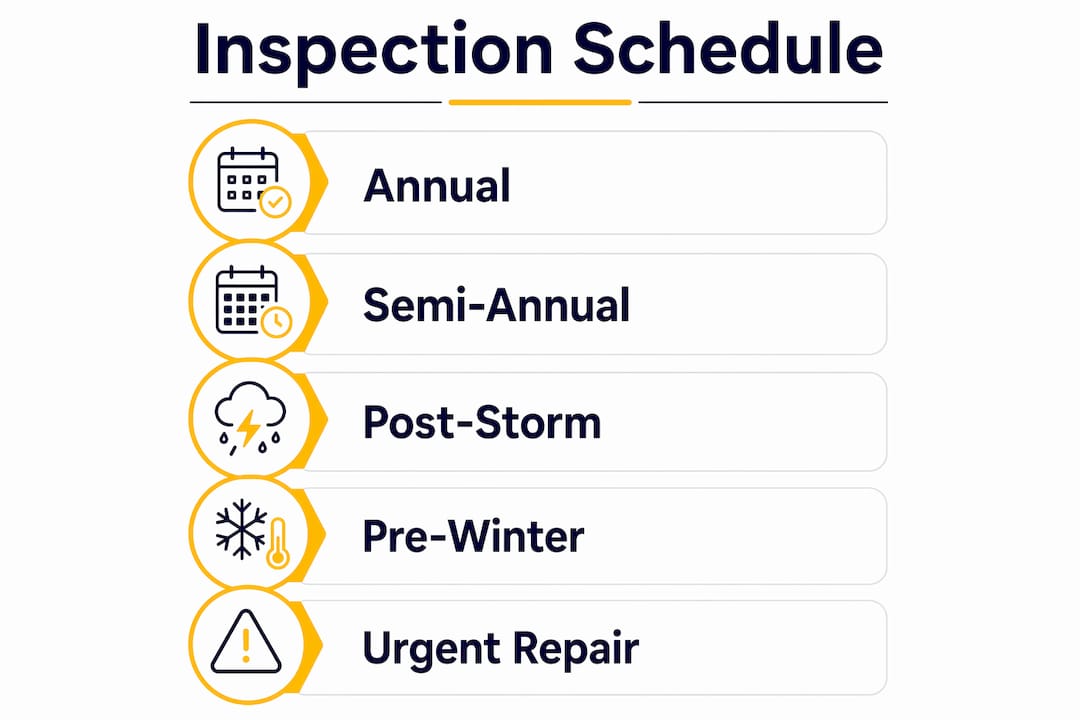
Inspection frequency depends on roof type, building use, and recent weather events. The general rules are straightforward, but the timing details matter more than most property managers realize.
- Commercial flat roofs: Schedule inspections semi-annually, once in spring and once in fall. Flat roofs accumulate debris, develop membrane stress from freeze-thaw cycles, and are far more vulnerable to ponding water than sloped systems. Two inspections per year is the minimum for responsible maintenance.
- Residential sloped roofs: Annual inspections are the standard recommendation. Fall is the preferred timing because it catches summer storm damage before winter weather compounds it.
- Post-storm inspections: Schedule within 48 hours after any major weather event. Post-storm damage patterns including membrane punctures, displaced flashing, and blocked drains become harder to identify as time passes. Insurance adjusters also look for prompt documentation.
- Pre-purchase and pre-lease inspections: Always require a professional roof evaluation before signing any commercial real estate transaction. A roof in poor condition is a negotiating point, not a surprise.
- Post-repair verification: After any significant repair or re-roofing project, schedule a follow-up inspection to confirm workmanship quality and warranty compliance.
The urgency framework from commercial flat roof standards applies across all inspection types. Structured severity-to-timeline frameworks help maintenance teams prioritize work without treating every finding as an emergency. That clarity is what separates reactive property management from planned, cost-controlled maintenance.
Timing also affects cost. Catching a small flashing failure in the fall costs a few hundred dollars to repair. Missing it means water infiltration through winter, insulation damage, and potential mold remediation by spring. The inspection pays for itself many times over when the timing is right.
Comparing Roof Inspection Methods: Visual, Drone, and Infrared
Three primary inspection methods exist for commercial and residential roofs. Each has a distinct cost range, turnaround time, and use case. Choosing the wrong method for your property type wastes money and leaves gaps in your documentation.
The national average for residential inspections in 2026 runs $150–$300. That range reflects the difference between a basic walk-through and a comprehensive evaluation with full documentation.
Drone-assisted inspections are the most significant shift in commercial roofing practice over the past five years. Drone reports deliver measurement grids, PDFs, and CAD-ready design files within 24 hours. That turnaround accelerates estimating and gives facility managers documentation they can hand directly to contractors for repair scoping. DroneDeploy is one of the most widely used platforms for this workflow.
Infrared scans detect moisture trapped beneath membrane layers that no visual inspection can find. Water absorbs heat during the day and releases it at night, creating thermal signatures that infrared cameras capture after sunset. This method is particularly valuable for EPDM and TPO flat roofs where subsurface moisture causes membrane delamination long before surface damage appears.
Pro Tip: For large commercial properties, combine a drone-assisted inspection for exterior measurement accuracy with an infrared scan for subsurface moisture detection. The two methods together give you a complete picture that neither delivers alone.
Choosing the right method comes down to three factors: property size, roof type, and safety access. A 2,000-square-foot residential roof needs a comprehensive visual inspection. A 50,000-square-foot flat commercial roof needs drone measurement and infrared scanning. Sending a technician to walk a large industrial roof when drone technology is available is both slower and less safe.
How to Interpret Roof Inspection Reports
A professional inspection report is only useful if you know how to read it. Most property managers receive a report, skim the summary, and file it away. That approach misses the real value.
A well-structured inspection report contains five components: written findings organized by zone, photographs with location notes, severity ratings, recommended actions with timelines, and a remaining lifespan estimate. Each component serves a specific purpose in your maintenance planning.
Start with the severity ratings. Urgent findings require action within 30 days. Routine findings need scheduling within 90 days. Monitor findings go on your calendar for the next inspection cycle. This three-tier system tells you exactly where to direct your maintenance budget first.
Key elements to verify in any professional report:
- Zone-by-zone findings: Each of the six inspection zones should have its own section. A report that lumps all findings together without zone attribution is incomplete.
- Photographs with location notes: Photos without location context are nearly useless for repair crews. Every image should reference a compass direction, grid coordinate, or landmark on the roof.
- Documented limitations: Inspectors should document every area they could not safely access. A report that claims to cover everything without noting any limitations is a red flag, not a sign of thoroughness.
- Lifespan estimate: This number drives capital planning. A roof with three years of estimated life needs a replacement budget now, not next fiscal year.
Detailed reports also support insurance claims and real estate transactions. Insurers require documented evidence of pre-existing conditions versus storm damage. Buyers and lenders in commercial transactions use inspection reports to negotiate price adjustments or require escrow for repairs. A report without photos, zone attribution, and severity ratings will not hold up in either context.
The most common report pitfall is vague language. Phrases like “minor wear observed” or “general deterioration noted” tell you nothing actionable. A quality report names the specific material, location, and recommended repair method for every finding.
How Terial Helps You Manage Inspection Workflows
Disconnected tools are the real cost in commercial roofing operations. When inspection notes live in one app, photos in another, and repair schedules in a spreadsheet, findings get lost and follow-through breaks down. Terial is the unified operating system built specifically for commercial roofing contractors. It connects inspection documentation, crew scheduling, and client reporting in one real-time system. Field crews capture site photos and findings directly in the mobile app, and automated reporting turns those inputs into branded, professional documents without manual assembly. If you are managing recurring maintenance inspections across multiple properties, Terial’s workflow automation removes the fragmentation that causes findings to fall through the cracks.
Key Takeaways
A professional roof inspection is the most cost-effective tool a property owner or facility manager has for preventing structural damage, controlling maintenance budgets, and maintaining compliance.
FAQ
What is Included in a Professional Roof Inspection?
A professional roof inspection covers six zones: roof materials, flashing, drainage, ventilation, structural elements, and the attic interior. The inspector documents findings with photos, severity ratings, and a remaining lifespan estimate.
How Much Does a Roof Inspection Cost in 2026?
The national average for a residential roof inspection runs $150–$300 in 2026. Drone-assisted and infrared scans for commercial properties range from $200–$600 depending on roof size and method.
How Often Should a Commercial Roof Be Inspected?
Commercial flat roofs require semi-annual inspections, typically in spring and fall, plus an additional inspection within 48 hours after any major storm event.
What Are The Signs You Need a Roof Inspection Now?
Schedule an inspection immediately after a major storm, if you notice interior water staining, if energy costs spike unexpectedly, or if your last documented evaluation is more than 12 months old.
Can You Use a Roof Inspection Report for Insurance Claims?
Yes. A detailed report with zone-by-zone findings, dated photographs, and severity ratings provides the documented evidence insurers require to distinguish storm damage from pre-existing conditions.
Recommended



Book a personalized demo
Get a 30-minute demo tailored to how you run your commercial roofing business

“Making the switch to Terial has greatly exceeded my expectations and has already had a meaningful impact on our team’s productivity. Terial has significantly reduced the amount of time required to complete many of our day-to-day operational tasks, allowing our team to focus more on serving our customers.”

