
How to Track Roof Maintenance Across Multiple Properties
Learn how to track roof maintenance across multiple properties effectively. Boost efficiency, save costs, and extend roof lifespan today!

Roof maintenance tracking across multiple properties is defined as the practice of centralizing inspection records, repair workflows, and warranty documentation for every roof in a commercial portfolio under one connected system. Property managers who rely on disconnected spreadsheets and email threads pay the price in missed inspections, voided warranties, and emergency repairs that cost 15–30% more than planned ones. Preventive maintenance delivers a 10–30x return on investment compared to reactive repairs and extends roof lifespan by 5–10 years. That gap between proactive and reactive is where portfolio value is won or lost.
How to Track Roof Maintenance Across Multiple Properties
The industry term for this practice is roof asset management, and it goes well beyond scheduling inspections. It means treating every roof section as a capital asset with its own condition score, maintenance history, warranty record, and replacement forecast. Property managers who adopt this framework stop reacting to leaks and start managing roofs the same way they manage any other major capital line item.
The core shift is organizational. A portfolio of ten commercial properties can have dozens of distinct roof sections, each with different membrane types, ages, and contractor histories. Without a centralized system, that complexity produces data silos. With one, it produces a clear picture of where money is going and where risk is building.
What Tools and Systems Are Essential to Manage Roof Maintenance?
Centralized multi-site maintenance systems follow a three-tier hierarchy: Portfolio, Property, and Asset. This structure standardizes maintenance data across all locations and enables real-time dashboards that show open work orders, upcoming inspections, and condition scores at a glance. Without this hierarchy, data from different sites stays fragmented and unusable for forecasting.
The minimum technology stack for effective roof inspection tracking includes:
- Portfolio dashboard. A single view showing condition scores, open work orders, and upcoming inspections for every property.
- Standardized inspection templates. Checklists tied to specific roof types (TPO, EPDM, modified bitumen) and warranty requirements, so every inspector captures the same data points.
- Automated scheduling and reminders. The system triggers inspection assignments based on calendar dates, weather events, or condition thresholds, not manual follow-up.
- Photo and document capture. Mobile apps that attach geotagged photos directly to inspection records, eliminating the “photos in someone’s phone” problem.
- Work order automation. Findings from inspections convert directly into prioritized work orders with assigned owners and due dates.
Pro Tip: Set up your inspection templates before you onboard any properties. A template built around your most common membrane type, say TPO, will capture the right data from day one and make condition scoring consistent across your entire portfolio.
The difference between entry-level field apps and full portfolio platforms is traceability. Entry-level tools capture data. Portfolio platforms connect that data to budgets, warranties, and compliance records automatically.
How to Establish a Routine Roof Inspection Schedule for Multiple Properties
A consistent inspection schedule is the foundation of any multi-property roof program. Biannual inspections in spring and fall are the minimum standard for commercial roofs. Spring inspections catch winter damage before it worsens through summer heat. Fall inspections prepare roofs for freeze-thaw cycles and heavy precipitation.
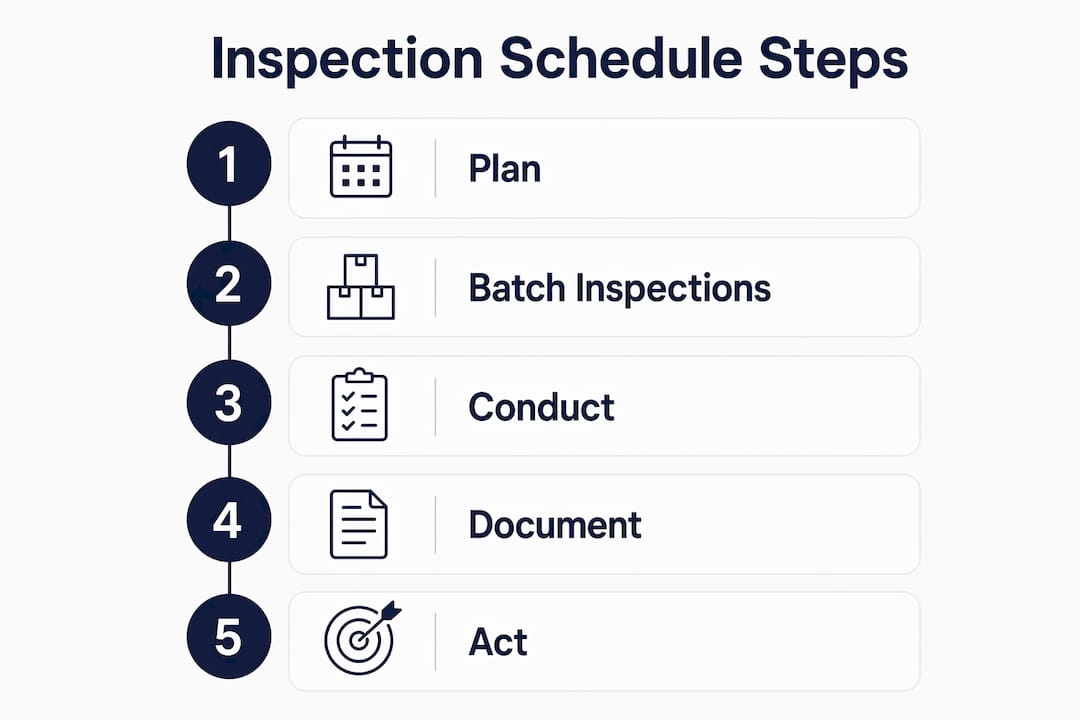
Between those biannual visits, monthly maintenance tasks prevent the slow deterioration that leads to major failures. The most critical monthly task is clearing roof drains and scuppers. Blocked drains cause ponding water, which accelerates membrane deterioration faster than almost any other single factor.
A practical schedule for a multi-property portfolio looks like this:
- Monthly. Clear all roof drains and scuppers. Remove debris from membrane surfaces. Check flashing at penetrations and perimeter edges for lifting or separation.
- After major weather events. Conduct a visual inspection within 48 hours of any hail event, high-wind storm, or heavy snowfall. Document findings with photos immediately.
- Spring (april or may). Full biannual inspection covering membrane condition, seams, flashings, penetrations, drainage, and equipment curbs. Update condition scores.
- Fall (september or october). Repeat full biannual inspection. Confirm all drains are clear before winter. Review any repairs completed since spring.
- Annually. Conduct a full warranty compliance review. Confirm all required maintenance has been documented per manufacturer specifications.
Documentation is not optional. Building roofs represent 40% of commercial insurance claims, and missing maintenance records can void warranties outright. Every inspection, repair, and maintenance visit needs a written record with date, inspector name, findings, and photos.
Pro Tip: Batch your inspections geographically. Scheduling all properties in one city or region on the same day or week reduces contractor travel costs and keeps your inspection cadence consistent across the portfolio.
Contractor selection matters as much as scheduling. Qualified contractors must have membrane-specific experience, not just a general roofing license. A contractor unfamiliar with EPDM seam behavior will miss defects that an experienced membrane specialist catches immediately. Require priority-ranked written reports after every inspection, not just verbal summaries.
What Are Best Practices for Documenting and Acting on Inspection Findings?
Inspection data has no value if it sits in a report that no one acts on. The most common failure point in multi-property roof programs is the gap between finding a defect and scheduling a repair. Automation closes that gap by converting inspection findings directly into prioritized work orders with assigned owners and deadlines.
Effective documentation practices for a multi-property portfolio include:
- Condition scoring. Assign every roof section a numeric condition score (1–10) at each inspection. This creates a trend line that shows whether a roof is improving, stable, or declining over time.
- Geotagged photos. Every defect gets a photo attached to its GPS coordinates. This eliminates disputes about location and makes it easy to verify repairs.
- Defect prioritization. Classify findings as immediate (active leak or structural risk), near-term (repair within 90 days), or monitor (track at next inspection). This prevents every finding from competing for the same budget.
- Repair verification. After a work order is completed, require a closing photo and inspector sign-off before marking it resolved. This creates a closed-loop record.
- Warranty compliance logs. Maintain a separate log for each roof showing all maintenance activities required by the manufacturer warranty. This is the document your warranty claim depends on.
Human inspections miss up to 50% of critical roof issues. Combining visual inspection with drone-based thermal imaging catches subsurface moisture and micro-cracks that are invisible to the naked eye. For high-value roofs or roofs with a history of recurring issues, thermal imaging is a cost-effective addition to the standard inspection protocol.
The alternative to connected documentation is spreadsheets and email threads. Spreadsheets do not trigger work orders. Emails do not track completion. Scattered records impair forecasting and leave you unable to prove compliance when a warranty claim or insurance dispute arises.
How Can Property Managers Forecast Costs and Extend Roof Lifespans?
The property managers who control roof costs most effectively treat each roof section as a capital asset, not a maintenance line item. Viewing roofs as capital assets with condition scores, warranty data, and lifecycle forecasts enables objective, data-driven repair and replacement decisions across a portfolio.
The practical tool for this is a central roof asset register. Each entry includes the roof section identifier, square footage, membrane type, installation date, warranty expiration, current condition score, and projected replacement year. Updated after every inspection, this register becomes the foundation for capital planning.
Trend data from condition scores tells you which roofs are declining faster than expected. A roof that drops two condition points in one year needs investigation, not just monitoring. That early signal prevents the emergency replacement call that costs 15–30% more than a planned one.
Pro Tip: Build a “replacement horizon” report that lists every roof in your portfolio sorted by projected replacement year. Share it with ownership or finance annually. This converts roof management from a reactive cost center into a predictable capital line item that gets funded before it becomes a crisis.
A mature portfolio roof asset program includes a central roof database, geographically batched recurring inspections, prioritized work plans, and regular reporting to stakeholders. This approach extends roof service life and reduces total ownership cost by enabling predictive maintenance and forecasted replacements years in advance.
What Are Common Challenges in Tracking Roof Maintenance for Multiple Properties?
The biggest challenge is not technology. It is fragmentation. Most property managers already have some form of inspection records, maintenance logs, and contractor invoices. The problem is that these records live in different places, belong to different people, and do not talk to each other.
Common failure points include:
- Unqualified contractors. A contractor without membrane-specific experience generates reports that miss real defects and documentation that does not meet warranty requirements. This is a compliance risk, not just a quality issue.
- Inspection-to-execution gaps. A finding logged in an inspection report that never becomes a work order is a defect that grows. Connected systems that automate this transition preserve compliance and budget accuracy.
- Missed inspections. Without automated scheduling alerts, inspections slip when staff are busy. A missed fall inspection means entering winter without knowing your roof’s condition.
- No performance tracking for contractors. If you cannot compare defect detection rates or repair quality across contractors, you cannot improve vendor selection over time.
The managers who succeed at multi-property roof oversight are not the ones with the most staff. They are the ones with the most connected data. When inspection findings flow automatically to work orders, and work orders flow to cost records, the portfolio manages itself more than it manages you.
Mobile inspection apps with built-in workflows and automated alerts address most of these challenges directly. The key requirement is that the app connects to your work order system and your asset register, not just to a photo library. Isolated data impairs forecasting and compliance regardless of how good the individual tool is.
Terial Brings Your Roof Maintenance Workflows Together
Fragmented tools are the real cost center in commercial roofing operations. Terial is built specifically to eliminate that fragmentation for commercial roofing contractors. The platform connects field inspection data, work order management, crew scheduling, and real-time reporting in one system, so nothing falls through the cracks between the job site and the office.
For contractors managing roof maintenance workflows across multiple commercial properties, Terial’s mobile field application captures site photos, generates work orders, and triggers automated alerts without manual data entry. The field service application is built for high crew adoption, which means the data you need for compliance and capital planning actually gets captured on site. If you are ready to replace disconnected tools with one connected system, Terial is worth a close look.
Key Takeaways
Tracking roof maintenance across multiple commercial properties requires a centralized asset register, automated inspection-to-work-order workflows, and consistent documentation to prevent emergency costs and extend roof lifespans.
FAQ
How Often Should Commercial Roofs Be Inspected?
Commercial roofs require a minimum of two full inspections per year, in spring and fall, plus a visual check within 48 hours of any major storm event.
What Records Are Needed to Keep a Roof Warranty Valid?
Most manufacturer warranties require documented proof of biannual inspections, monthly drain maintenance, and all repairs completed by qualified contractors with membrane-specific experience.
What is a Roof Condition Score?
A roof condition score is a numeric rating (typically 1–10) assigned to a roof section after each inspection to track deterioration trends and prioritize repairs across a portfolio.
How Does Thermal Imaging Improve Roof Inspections?
Drone-based thermal imaging detects subsurface moisture and micro-cracks that visual inspection misses, catching up to 50% more critical defects before they cause structural damage.
What Is the ROI of Preventive Roof Maintenance?
Preventive maintenance delivers a 10–30x return on investment compared to reactive repairs and extends roof lifespan by 5–10 years, making it the highest-return maintenance activity in most commercial portfolios.
Recommended


More articles



Book a personalized demo
Get a 30-minute demo tailored to how you run your commercial roofing business

“Making the switch to Terial has greatly exceeded my expectations and has already had a meaningful impact on our team’s productivity. Terial has significantly reduced the amount of time required to complete many of our day-to-day operational tasks, allowing our team to focus more on serving our customers.”

