
Why Roofing Production Needs Connected Field Office Tools
Discover why roofing production needs connected field office tools to boost efficiency, reduce wasted time, and enhance revenue potential.
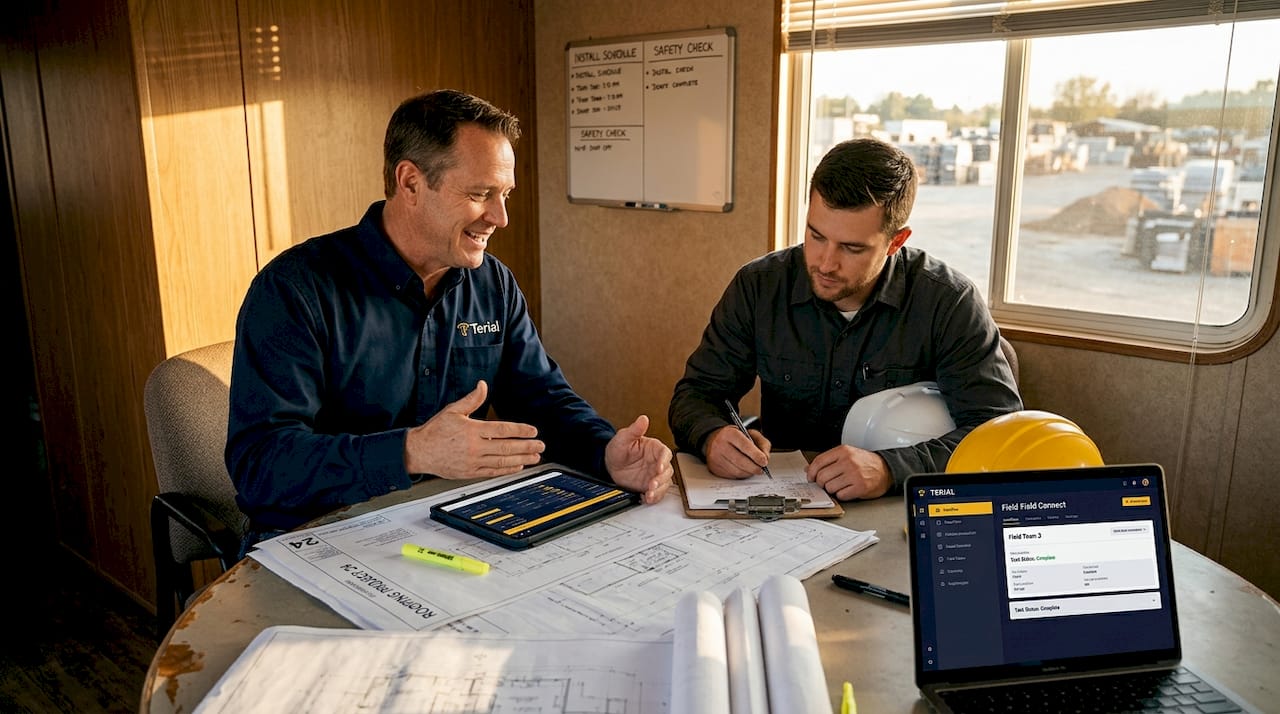
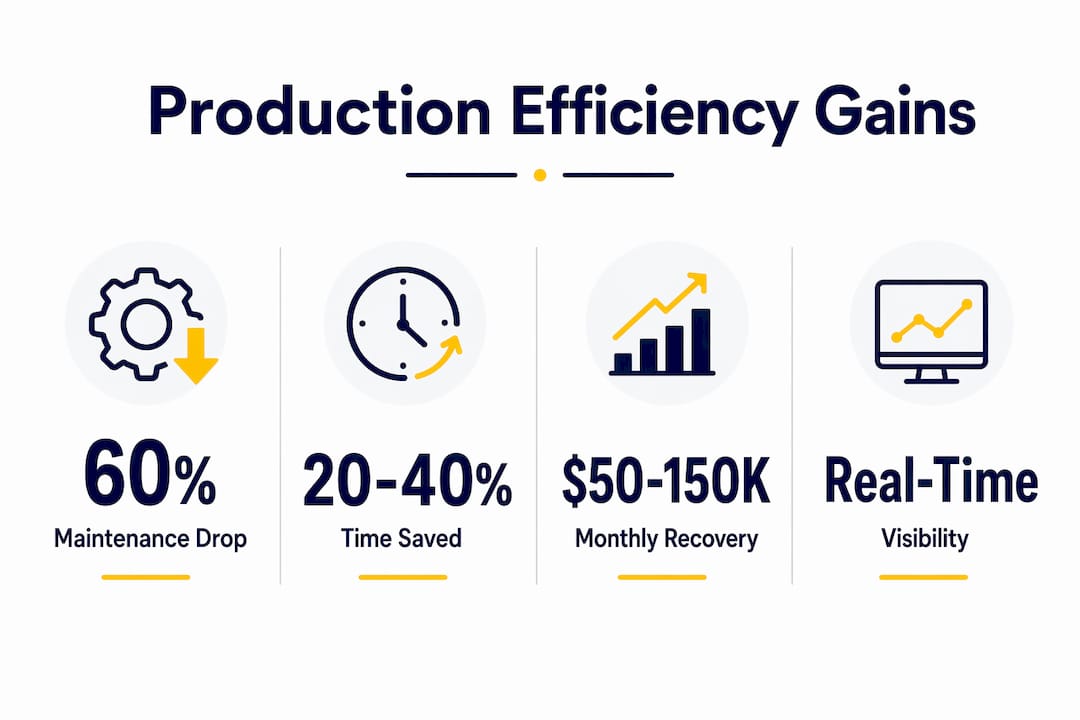
Connected field office tools are integrated software ecosystems that link CRM, estimating, scheduling, field service, and accounting into a single real-time workflow. Commercial roofing companies running disconnected systems lose 20 to 40% of productive time to manual data movement between tools. That is not a technology problem. It is a revenue problem. Understanding why roofing production needs connected field office tools starts with recognizing that your office team is currently functioning as unpaid middleware, copying data between platforms that were never designed to talk to each other.
Why Roofing Production Needs Connected Field Office Tools
The average commercial roofing company runs 5 to 7 separate software tools, none of which share data automatically. A project moves from lead to estimate to signed contract to job order to invoice, and at each handoff, someone on your team manually re-enters information. That person is not managing crews. They are not catching budget overruns. They are copying and pasting.
The industry term for what these tools provide is workflow integration, though the phrase “connected field office tools” captures the practical reality better for production managers. The goal is not just software connectivity. It is operational continuity from the first site visit to the final payment.
The cost of fragmentation compounds fast. Manual double entry between project management and accounting systems causes mismatched data, billing errors, and staff frustration. When your field foreman updates a change order on site and that update does not reach your accounting system until Friday afternoon, you are already behind on billing. Multiply that by 15 active jobs and the revenue exposure becomes significant.
Spreadsheets are the most common symptom of this problem. Many roofing operations use Excel as the connective tissue between their CRM, their proposal tool, and their accounting software. Spreadsheets break. They do not send alerts. They do not flag a $40,000 estimate that expired three weeks ago because no one followed up.
The office team should be managing the business, not acting as the integration layer between software tools that refuse to communicate. This is the core operational argument for connected systems in roofing production.
How Disconnected Tools Damage Production Efficiency
Disconnected roofing software creates three distinct failure modes, and each one costs money in a different way.
Context switching is the first. Research consistently shows that context switching costs workers 20 to 40% of their productive capacity. For a production manager juggling a separate CRM, a separate estimating tool, QuickBooks for accounting, and text messages for crew dispatch, every tool switch carries a cognitive tax. The manager loses the thread of what they were doing, makes small errors, and takes longer to complete tasks that should be routine.
Information silos are the second failure mode. When your field team captures site photos and labor hours in one app and your office team tracks job costs in another, neither side has a complete picture. A project manager cannot tell you in real time whether a job is running over budget because the committed costs from the field have not synced to the financial system. That gap between field reality and office records is where margin disappears.
Decision paralysis is the third. When data lives in multiple systems and none of them agree, managers stop trusting the numbers. They call the foreman instead of reading a dashboard. They delay invoicing because they are not sure the job is actually complete. They approve change orders verbally because the formal process takes too long. Every one of these workarounds introduces risk.
The practical result is a production operation that runs slower than it should, bills later than it should, and catches problems after they have already cost money.
What Are the Real Benefits of Connected Field Office Tools?
The evidence for connected tools in roofing production is no longer theoretical. Operational data from 2025 and 2026 shows measurable gains across efficiency, revenue, and customer responsiveness.
t
BMI Group consolidated 44 separate ERP systems into a single SAP Cloud ERP platform and saw system maintenance time drop 60% while purchase order cycle times fell from 2.77 days to 1.22 days. That is a 66% improvement in a single operational metric. For a commercial roofing company processing dozens of purchase orders per week, that time savings translates directly into faster job starts and tighter cash flow.
On the revenue side, AI can help roofing contractors recover thousands of dollars in work that would otherwise slip through the cracks. It can monitor aging estimates, invoice delays, labor overruns, and dispatch inefficiencies, then flag issues before they turn into lost revenue. That is the difference between a static system and a connected one. A static system stores data. A connected system acts on it.
Customer visibility improves as well. Before BMI Group’s integration, fragmented ERP systems prevented customer-facing teams from providing real-time order and delivery status despite working hard. After integration, those teams had live access to orders, stock, and timelines. For commercial roofing, that translates to project managers who can answer owner questions immediately instead of calling three people to piece together an answer.
Pro Tip: Start measuring the time your office staff spends re-entering data between tools each week. Most roofing companies are shocked to find it exceeds 10 hours per person. That number is your baseline ROI case for connected tools.
Point-to-Point Integrations vs. Intelligent Orchestration
Not all integration approaches deliver the same results. Understanding the difference between point-to-point connections and intelligent orchestration layers is critical before you invest in connecting your roofing toolchain.
Point-to-point tools like Zapier work by creating direct connections between two specific applications. They are useful for simple, linear workflows. But point-to-point integrations become costly, fragile, and unmaintainable as your toolchain grows. If you have six tools and need each one to talk to the others, you are managing 15 separate connections. When one tool updates its API, half your automations break simultaneously.
Intelligent orchestration takes a different approach. Instead of connecting tools pairwise, an orchestration layer understands the entire workflow and coordinates data movement based on business logic. It knows that a signed change order should trigger a cost code update in your ERP, a notification to the field foreman, and a revised invoice draft. No human needs to manage that sequence.
The data you sync matters as much as the method. Syncing committed costs and change orders aligned with cost codes protects margin and billing accuracy far more than syncing status fields or contact records. Integration logic with ERP systems prioritizes cost-aligned objects precisely because those are the fields that determine whether a job is profitable. Syncing the wrong data at the wrong granularity wastes effort and creates a false sense of connectivity.
Here is a practical sequence for evaluating your integration approach:
- Map every manual data transfer your office team performs in a typical week and identify which tools are involved.
- Identify the three data flows that most directly affect billing accuracy and job profitability.
- Evaluate whether your current tools offer native integrations for those specific flows before adding middleware.
- If native integrations do not cover your critical workflows, assess orchestration platforms that understand roofing-specific business logic.
- Prioritize syncing cost codes, committed costs, and change orders before optimizing for convenience fields like contact names or status labels.
Legacy ERP consolidation follows the same logic at enterprise scale. SAP Cloud ERP’s consolidation approach for BMI Group succeeded because it focused on operational data that directly affected purchasing, invoicing, and customer service. The lesson for commercial roofing is the same: connect the data that drives decisions, not just the data that is easy to move.
How Production Managers Can Act on Connected Tools Today
The importance of roofing technology is clearest when you focus on the three workflows that consume the most manual effort in production: crew dispatch, estimate and invoice monitoring, and change order communication.
Automating crew dispatch removes one of the most time-consuming daily tasks for production managers. When dispatch connects directly to job scheduling, labor tracking, and customer notifications, a task that previously required multiple calls and manual updates becomes a single confirmation. Real-time dispatching also protects revenue by preventing scheduling gaps that leave crews idle or jobs delayed.
AI tools now automate manual office tasks including call answering, scheduling, estimating, and follow-up. AI adoption in roofing more than doubled in one year, enabling faster quote generation and better customer responses without replacing skilled tradespeople. The practical implication is that a production manager with connected tools and AI monitoring can oversee more jobs with the same headcount.
The most common mistake in implementation is trying to connect everything at once. A phased approach works better. Start with the integration that eliminates the most manual re-entry, typically the connection between your field service tool and your invoicing system. Measure the time saved and the error rate reduction. Then expand to the next highest-friction handoff. This approach builds confidence in the system and gives your team time to adopt new workflows before the next layer is added.
Pro Tip: When evaluating connected tools, ask vendors specifically which data fields sync automatically and which require manual triggers. The answer tells you immediately whether you are buying a real integration or a marketing claim.
Key Takeaways
Connected field office tools eliminate the manual data transfers that cost roofing production operations 20 to 40% of productive capacity, protect revenue through real-time monitoring, and give managers the visibility to make decisions before problems become losses.
How Terial Connects Your Roofing Production Workflows
Terial is built specifically for commercial roofing contractors who are done managing fragmentation. The platform connects CRM, estimating, crew dispatch, labor tracking, change orders, and invoicing into a single real-time system. Your field crews capture site photos, log hours, and approve change orders from mobile devices. Your office sees those updates immediately, without anyone re-entering data.
Terial generates invoices in under a minute and provides real-time cost monitoring so you catch budget overruns before they close. The platform was built alongside leading commercial contractors, which means the workflows match how roofing production actually runs, not how a generic project management tool assumes it does.
If your office team is spending hours each week acting as the integration layer between your tools, explore Terial’s workflow automation platform and see what a unified operating system looks like for a commercial roofing operation. You can also review the full feature set to see exactly which workflows connect out of the box.
FAQ
What are connected field office tools in roofing?
Connected field office tools are integrated software systems that link field operations, including dispatch, labor tracking, and change orders, to office functions like estimating, invoicing, and accounting in real time. They eliminate manual data transfers between separate platforms.
How much productivity do disconnected roofing tools waste?
Disconnected systems cause 20 to 40% of productive time to be consumed by manual data movement. Office teams act as middleware between CRM, spreadsheets, proposal tools, and accounting software.
What data should roofing companies prioritize syncing first?
Committed costs, change orders, and cost-code aligned financial data should sync first. These fields directly protect margin and billing accuracy, unlike status fields or contact records that have lower operational impact.
Can AI tools help roofing production managers recover lost revenue?
Yes. Platforms monitor aging estimates and invoice delays, helping contractors recover lost revenue that would otherwise expire without follow-up.
Recommended




Book a personalized demo
Get a 30-minute demo tailored to how you run your commercial roofing business

“Making the switch to Terial has greatly exceeded my expectations and has already had a meaningful impact on our team’s productivity. Terial has significantly reduced the amount of time required to complete many of our day-to-day operational tasks, allowing our team to focus more on serving our customers.”

