
Roof Proposal Software for Commercial Contractors: 2026 Guide
Discover how roof proposal software can streamline your commercial roofing bids. Save time, reduce errors, and improve profitability in 2026.

Roof proposal software is a specialized platform that automates the creation, delivery, and tracking of commercial roofing proposals within a single connected workflow. Contractors who still rely on spreadsheets, generic PDFs, and disconnected estimating tools pay a real price: manual data stitching consumes 8–15 hours of admin time every week. That time does not come back, and neither do the bids lost to slow turnaround. The right proposal platform, built for commercial work, eliminates that drag and turns your proposal process into a repeatable, margin-protecting system.
What Is Roof Proposal Software and Why Does It Matter?
Roof proposal software is defined as an integrated digital tool that connects measurement, estimating, proposal generation, and client communication into one workflow. The industry also calls this category proposal automation software or, when it covers the full job lifecycle, a roofing operating system. Both terms describe the same core shift: moving from one-off documents to a living, connected process.
The cost of staying fragmented is not abstract. Contractors running separate tools for measuring, estimating, and invoicing spend hours re-entering the same data across systems. Each re-entry is a chance for a missed line item, a wrong multiplier, or a margin error that does not surface until the job is already underway. A unified roofing operating system eliminates that duplication at the source.
Commercial roofing also has specific demands that generic tools do not address. Multi-trade scopes, phased project schedules, and large material orders require proposal software that maps directly to production workflows. Software built for residential insurance work handles a different problem set entirely. Choosing the right category of tool is the first decision, and it is the one most contractors get wrong.
How Does Roof Proposal Software Speed Up Estimating?
The estimating step is where most commercial proposals stall. Manual roof measurement, done from the ground or from printed plans, takes 15–20 minutes per section and introduces human error at every step. Digital measurement tools integrated into proposal platforms cut that process to seconds per section. The time savings compound across a full bid package.
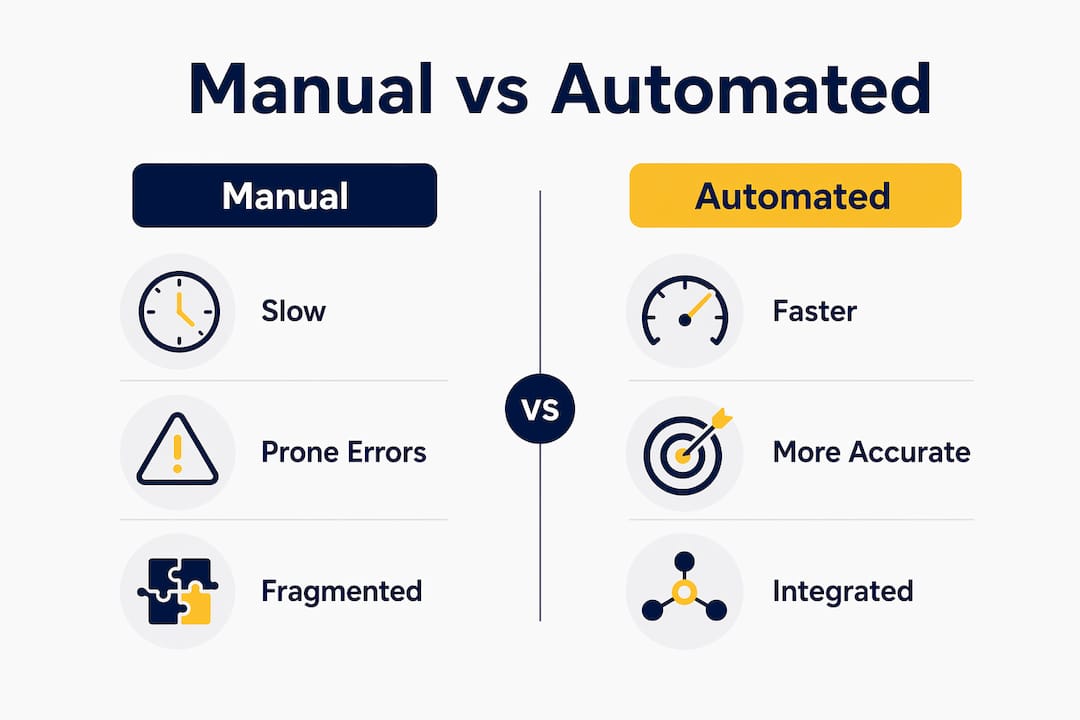
Automated calculations remove the most common source of proposal errors: missed line items. When a system pulls measurements directly into a pre-built scope template, every material category, labor rate, and overhead multiplier populates automatically. Your estimator reviews and adjusts rather than building from scratch. That shift alone reduces errors and speeds up the review cycle.
Interactive “living estimates” take the process further. Instead of sending a static PDF that a client prints and files, you send a proposal the client can interact with in real time. They can see price updates as scope options change. That transparency shortens the sales cycle because it replaces back-and-forth emails with a single shared document.
Key estimating capabilities to look for:
- Digital measurement integration that pulls roof dimensions directly into the estimate
- Automated scope templates pre-loaded with your standard line items and labor rates
- Real-time price updates that reflect material cost changes without manual edits
- Client-facing portals where prospects can review, ask questions, and approve online
- Audit trails that log every change to the estimate for dispute protection
Pro Tip: Verify every digital measurement against at least one field check before submitting a commercial bid. Aerial data is accurate for most surfaces, but HVAC penetrations, skylights, and parapet walls require on-site confirmation to protect your margin.
How Does Standardized Proposal Generation Protect Your Profit Margin?
A proposal is not just a sales document. It is the contract that drives your material orders, your crew schedule, and your subcontractor commitments. When a proposal is built informally, without documented templates and enforced multipliers, the errors it contains travel downstream into every phase of the job. Disconnected proposals cause 10–20% margin erosion on complex commercial jobs. On a $500,000 project, it is $50,000–$100,000 walking out the door.
Standardized proposal templates solve this by locking in your company’s margin structure before the estimator touches the job. Material costs pull from a live price list. Labor rates reflect your current burden. Overhead multipliers update automatically when you change them in one place. The estimator cannot accidentally undercut your floor because the floor is built into the system.
The integration between proposals and production is where most contractors still have a gap. When a signed proposal automatically triggers a material purchase order and a crew scheduling request, you eliminate the sales-to-production handoff failure that causes most commercial job losses. Connecting proposals to material ordering and scheduling is not a luxury feature. It is the mechanism that stops profit leakage.
The table above shows why manual processes do not just cost time. They create structural gaps where margin disappears before a single shingle is installed.
What Features Should You Look For In Commercial Roofing Proposal Software?
Commercial roofing has a different operational profile than residential work. The software you choose must reflect that. Features built for high-volume residential insurance claims do not map to multi-phase commercial scopes, long client approval cycles, or large material procurement processes. Choosing generic estimating software instead of a commercial-focused tool creates manual rework and margin erosion from day one.
The features that matter most for commercial contractors:
- Mobile-first design that field crews actually use. Mobile tools tied to photos, measurements, and contracts at the job site eliminate lag and prevent data loss between field and office.
- GPS-tagged photo documentation that attaches site photos directly to the proposal and job record, creating a defensible paper trail.
- Automated follow-up sequences that trigger when a proposal has not been opened or responded to within a set window. Automated alerts prevent 30–40% of bid losses caused by stale leads sitting uncontacted.
- Digital signature and approval workflows that eliminate the back-and-forth of printing, signing, and scanning.
- CRM pipeline integration that tracks every proposal from sent to signed, with visibility into where each deal stands.
- Change order management built into the same system as the original proposal, so scope changes do not create a separate paper trail.
The feature that most contractors underestimate is usability for field crews. A platform that office staff loves but crews ignore defeats the purpose. Real-time data capture only happens when the people on the roof can actually use the tool without training sessions or workarounds.
Pro Tip: Before committing to any platform, run a live test with two or three of your field crew members. If they cannot complete a basic site documentation task in under five minutes without help, the adoption rate will be low and the data quality will suffer.
What Are The Best Practices For Implementing Roofing Proposal Software?
The most common implementation mistake is buying software before documenting your workflows. Owners facing operational chaos often respond by hiring more staff or purchasing feature-heavy platforms, without first standardizing the process the software is supposed to enforce. Standardized workflows enforced by software drive scalable growth. Software layered on top of an undocumented process just automates the chaos.
Follow this sequence for a successful rollout:
- Document your current proposal workflow from first site visit to signed contract. Write down every step, every person involved, and every tool currently used.
- Identify the three biggest failure points. These are usually measurement errors, missed follow-ups, and manual re-entry between estimating and production.
- Choose software built for commercial roofing, not a generic construction tool adapted for roofing. The feature set and default templates should match your scope types without heavy customization.
- Run a phased rollout starting with one estimator and one project type. Validate the workflow before expanding to the full team.
- Set performance metrics before go-live. Track proposal turnaround time, bid win rate, and admin hours per proposal. These numbers tell you whether the software is working.
- Train field crews separately from office staff. Their workflows are different. Combining training sessions creates confusion and reduces adoption on both sides.
Modern roofing software typically pays for itself within 30–60 days when implementation follows a structured process. That timeline assumes faster proposal turnaround, fewer errors, and reduced admin overhead. Contractors who skip workflow documentation before go-live typically see that timeline stretch to six months or longer.
The benefits of estimating software extend beyond speed. Accuracy improvements reduce the change orders and disputes that erode client relationships on commercial jobs. A clean proposal process is also a sales tool. Clients who receive a professional, interactive proposal with clear scope documentation close faster and refer more often.
Key Takeaways
Roof proposal software pays for itself fastest when it enforces standardized workflows, connects proposals to production, and gives field crews a mobile tool they actually use.
Terial Brings Your Proposal and Operations Workflows Together
Terial is built specifically for commercial roofing contractors who are done managing proposals, scheduling, and invoicing across separate tools. The platform connects your roofing proposal and field operations into one real-time system: from the first site photo to the signed proposal, through crew dispatch, change orders, and invoicing in under a minute. Field crews use it on-site without friction, which means your office gets accurate data without chasing it down. Terial does not add another tool to your stack. It replaces the fragmentation that is costing you margin on every job. If your proposal process still depends on manual re-entry and disconnected follow-up, Terial’s workflow automation is worth a close look.
FAQ
What is roof proposal software?
Roof proposal software is a digital platform that automates the creation, delivery, and tracking of roofing project proposals. It connects measurement, estimating, client approval, and production handoff into one workflow.
How does proposal software reduce estimating errors?
Automated scope templates and live price lists populate every line item from measured data, removing manual re-entry. This eliminates the missed items and wrong multipliers that cause margin loss on commercial jobs.
What is the difference between residential and commercial roofing proposal software?
Commercial roofing software handles multi-phase scopes, large material procurement, and long client approval cycles. Residential tools are typically built for high-volume insurance claims and lack the production integration commercial contractors need.
How long does it take to see ROI from roofing proposal software?
Roofing software typically pays for itself in 30–60 days when implementation follows a structured rollout with documented workflows and clear performance metrics.
Should field crews use the same proposal software as the office?
Yes, but their interface and training should be separate. Mobile-first tools that field crews can use on-site without friction are the key to real-time data capture and accurate job records.
Recommended




Book a personalized demo
Get a 30-minute demo tailored to how you run your commercial roofing business

“Making the switch to Terial has greatly exceeded my expectations and has already had a meaningful impact on our team’s productivity. Terial has significantly reduced the amount of time required to complete many of our day-to-day operational tasks, allowing our team to focus more on serving our customers.”

