
Roofing Contractor Technology: 2026 Guide for Commercial Teams
Discover how roofing contractor technology transforms commercial roofing. Learn about unified systems that boost efficiency and win more bids in 2026.

Roofing contractor technology is the integrated digital ecosystem that connects estimating, scheduling, field service, and invoicing into one operating system for commercial roofing businesses. The shift from spreadsheets and disconnected apps to unified platforms is the defining operational change in commercial roofing right now.
What Are the Key Components of Roofing Contractor Technology?
The core of modern roofing contractor technology is the connection between tools that handle every stage of a project, from first contact to final invoice.
The essential components include:
- AI-powered estimating software. These tools automate quantity takeoffs and pricing calculations directly from digital plans or aerial imagery. Contractors can send a professional estimate within 15 minutes using AI-integrated roofing software, compared to hours with manual methods.
- Digital roof measurement tools. High-resolution satellite and aerial imagery let you generate accurate measurements from an address in seconds. No site visit required for the initial quote.
- Integrated CRM systems. A CRM built for roofing tracks leads, stores customer data, logs follow-ups, and keeps your sales pipeline visible. Without it, leads fall through the gaps between phone calls and sticky notes.
- Project management and scheduling. Field crews and office teams need to see the same schedule in real time. Disconnected scheduling creates missed appointments, double-booked crews, and cost overruns that eat margin fast.
- Invoicing and payment processing. Generating an invoice the moment a job is complete, rather than days later, directly improves cash flow. Platforms like Terial generate invoices in under a minute from the field.
Pro Tip: Before evaluating any platform, map your current workflow on paper. Identify where data gets re-entered manually. That re-entry point is your biggest cost, and the first problem technology should solve.
How Does Artificial Intelligence Enhance Roofing Contractor Workflows?
AI does not replace roofing expertise. It removes the low-value, time-consuming tasks that keep your best people from doing high-value work.
The four areas where AI delivers the clearest gains are:
- Takeoff automation. AI traces and counts roof components from digital plans automatically. The reduction in takeoff time means an estimator who once spent a full day on one bid can now complete multiple bids in the same window.
- Aerial and satellite measurement. AI converts drone footage and satellite imagery into precise measurements without manual tracing. Modern platforms generate professional quotes from a single address, with no manual takeoff required.
- Inspection photo documentation. AI organizes site photos, attaches notes, and drafts inspection reports from voice memos and field inputs. This turns a chaotic folder of job-site images into a structured, client-ready document.
- Storm lead triage and follow-up. After a major weather event, the volume of inbound leads spikes fast. AI tools applied to storm lead triage sort and prioritize contacts automatically, so your sales team responds to the highest-value opportunities first.
Pro Tip: Do not try to automate everything at once. Pick one bottleneck, such as inspection documentation or storm lead triage, and apply AI there first. Measure the time saved over 30 days before expanding.
The critical boundary to understand is this: AI boosts productivity for routine tasks but does not replace pricing judgment or customer trust. The contractor who understands that distinction uses AI as a multiplier, not a crutch.
Why Is Integration and Centralization Critical in Commercial Roofing?
The real cost of fragmented tools is not the subscription fees. The hidden cost is the labor lost to double data entry, missed follow-ups, and version control errors across disconnected systems. A measurement lives in one app, the estimate in another, the schedule in a spreadsheet, and the invoice in an accounting tool. Every handoff between those systems is a place where data gets lost, delayed, or wrong.
Fragmented vs. Unified: What the Difference Looks Like in Practice
Unified platforms that integrate estimating, scheduling, CRM, and communications create a single source of truth across every project. That single source eliminates the version control problem entirely.
Speed is the competitive outcome that matters most. Contractors using integrated platforms respond to customers faster than those using separate tools for measurement, CRM, and invoicing. In commercial roofing, the contractor who responds first with a credible estimate wins the job more often than the contractor with the lower price.
The integration priority question for a growing commercial roofing business is not which tools to buy. It is which workflows to connect first. Estimating and invoicing connected to a live project schedule is the foundation. Everything else builds on top of that.
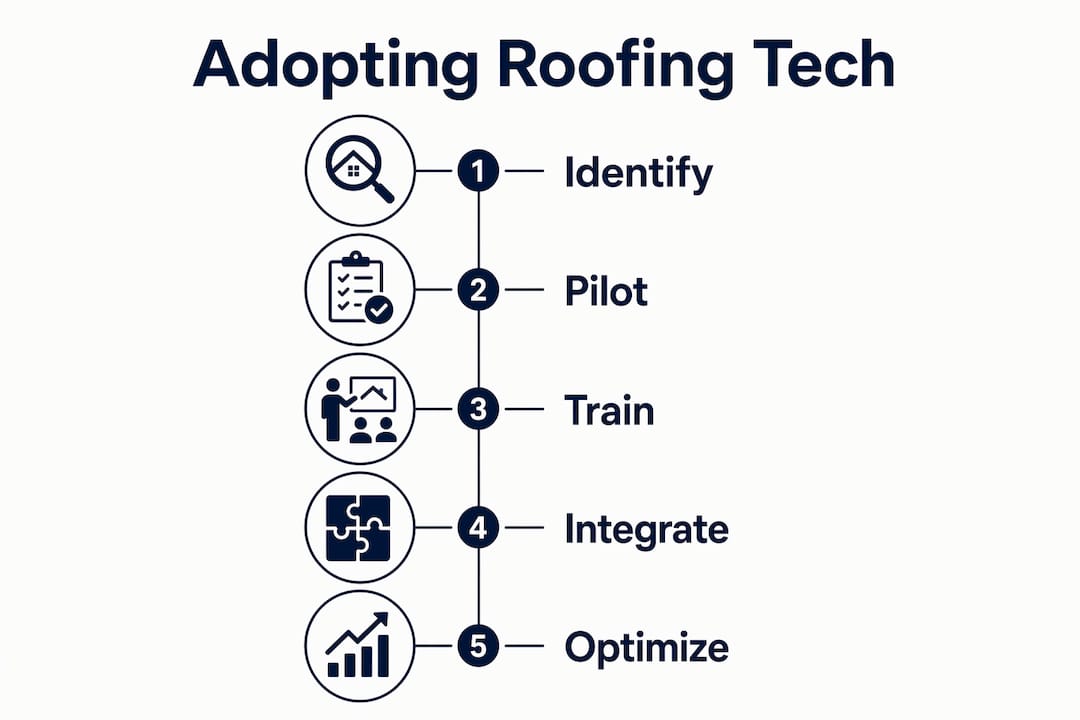
What Are the Best Practices for Adopting Roofing Technology?
Technology adoption fails most often not because the software is bad, but because the rollout tries to change everything at once. Field crews resist tools they do not understand. Office teams revert to old habits when new systems feel slower than the spreadsheets they replaced.
The practices that produce lasting adoption are straightforward:
- Start with one core workflow. Mastering one function for 30 days before expanding is the adoption pattern that works. Inspection documentation is a strong starting point because the time savings are visible immediately and the crew buy-in is easier to achieve.
- Avoid full-platform overhauls. Replacing every tool at once creates tech fatigue. Crews stop using the new system within weeks. Roll out one module, prove the value, then add the next.
- Invest in training before launch. A platform your crew does not use is worth nothing. Hands-on training sessions, short video walkthroughs, and a designated internal point of contact all improve adoption rates significantly.
- Measure impact with data. Use the platform’s reporting to track time saved, error rates, and response times after 30 days. Concrete numbers build internal support for expanding the technology further.
- Prioritize field crew usability. If the mobile interface is difficult to use on a job site, field crews will not use it. The best field service applications are built for one-handed use in the field, not for desktop workflows.
The shift that technology makes possible is moving from technicians managing spreadsheets to business owners managing dashboards. That shift requires the right platform and a deliberate rollout plan. Rushing either one produces the same result: a tool that collects dust.
Pro Tip: Assign one person on your team as the internal technology lead. That person owns the rollout, answers crew questions, and reports results to leadership. Without a named owner, adoption stalls.
Terial: One Platform for Commercial Roofing Operations
Commercial roofing contractors running on disconnected tools pay a real price every day. Terial is built to end that fragmentation. It connects estimating, sales pipeline management, field service, project scheduling, and invoicing into one real-time system, so data moves with the job instead of getting stuck between apps.
Terial’s workflow automation platform generates invoices in under a minute, tracks labor hours from the field, manages change orders, and gives office teams a live view of every active project. The platform is built specifically for commercial roofing, with features developed alongside contractors who run the same operations you do. If you are ready to replace fragmented tools with a system your crews will actually use, explore Terial’s full feature set and see how it fits your operation.
Key Takeaways
Roofing contractor technology delivers its greatest value when integrated tools replace fragmented apps, giving commercial contractors a single source of truth from estimate to invoice.
FAQ
What is roofing contractor technology?
Roofing contractor technology is the integrated set of digital tools that commercial roofing businesses use to manage estimating, scheduling, field service, and invoicing. The term covers everything from AI-powered takeoff software to unified operating platforms like Terial.
How much time can AI save on roofing estimates?
AI-powered takeoff tools reduce manual takeoff time by up to 95%, and most contractors can produce a professional estimate within 15 minutes using AI-integrated software.
Why do disconnected roofing apps hurt profitability?
The main cost of fragmented tools is hidden labor lost to double data entry, missed follow-ups, and version control errors, not the subscription fees themselves. Contractors using separate apps for measurement, CRM, and invoicing also respond slower to customers, which directly costs them bids.
What is the best way to start adopting roofing technology?
Start by mastering one core workflow, such as inspection documentation or storm lead triage, for 30 days before expanding to other modules. This approach prevents tech fatigue and builds crew buy-in before the next rollout phase.
Does AI replace roofing estimators?
AI does not replace estimators. It handles routine tasks like photo organization and quantity takeoffs, but pricing judgment and customer relationships remain human responsibilities. The best results come from contractors who use AI as a productivity tool, not a decision-maker.
Recommended
- What Is a Roofing Operating System? A 2026 Guide
- Roofing Crew Adoption Technology Tips That Work
- Automated Workflows and Roofing Profitability: 2026 Guide
- Roofing Business Scaling Checklist for Contractors




Book a personalized demo
Get a 30-minute demo tailored to how you run your commercial roofing business

“Making the switch to Terial has greatly exceeded my expectations and has already had a meaningful impact on our team’s productivity. Terial has significantly reduced the amount of time required to complete many of our day-to-day operational tasks, allowing our team to focus more on serving our customers.”

